A sculptor asked to paint
The chapel was built in 1473–1481 for Pope Sixtus IV, who gave it its name; Botticelli, Perugino and Ghirlandaio painted its walls. In 1508 Pope Julius II asked Michelangelo — who thought of himself as a sculptor — to paint the ceiling.
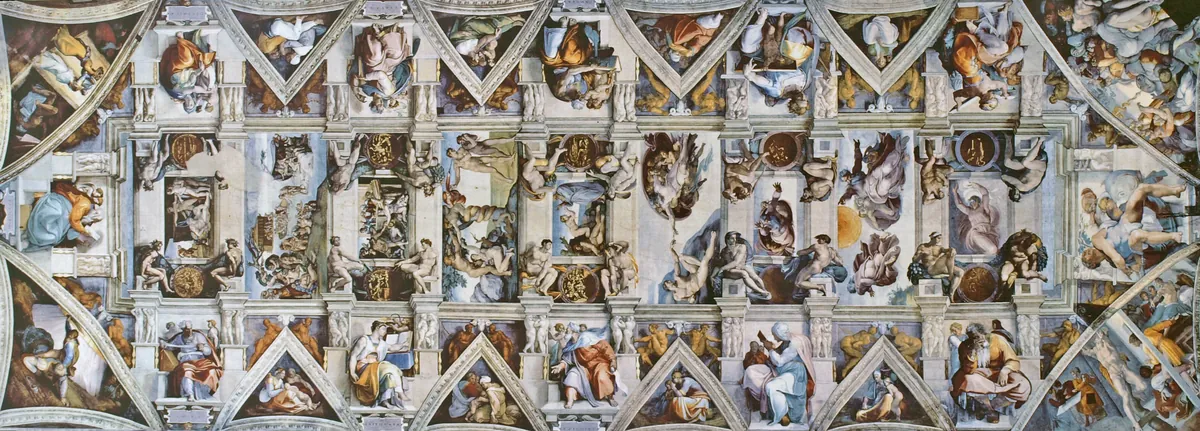
He worked in fresco: painting fast on wet plaster, one day's patch at a time, so the colour binds into the wall. He stood on a scaffold he designed himself, head bent back, until 1512. The centre of the ceiling tells the first book of the Bible, from the Creation to Noah, surrounded by prophets, sibyls and the nude youths called ignudi.
In 1536, now over sixty, he came back to paint the Last Judgment on the altar wall, finished in 1541 under Pope Paul III. Today the chapel is still where the cardinals meet to elect a new pope.
…non sendo in loco bon, né io pittore.
…for I am not in a good place, and I am no painter. — Michelangelo, in a comic sonnet about painting the ceiling
The frescoes
Ceiling scenes are numbered from the altar towards the entrance — the order of the story. Michelangelo painted them the other way round.
The Last Judgment
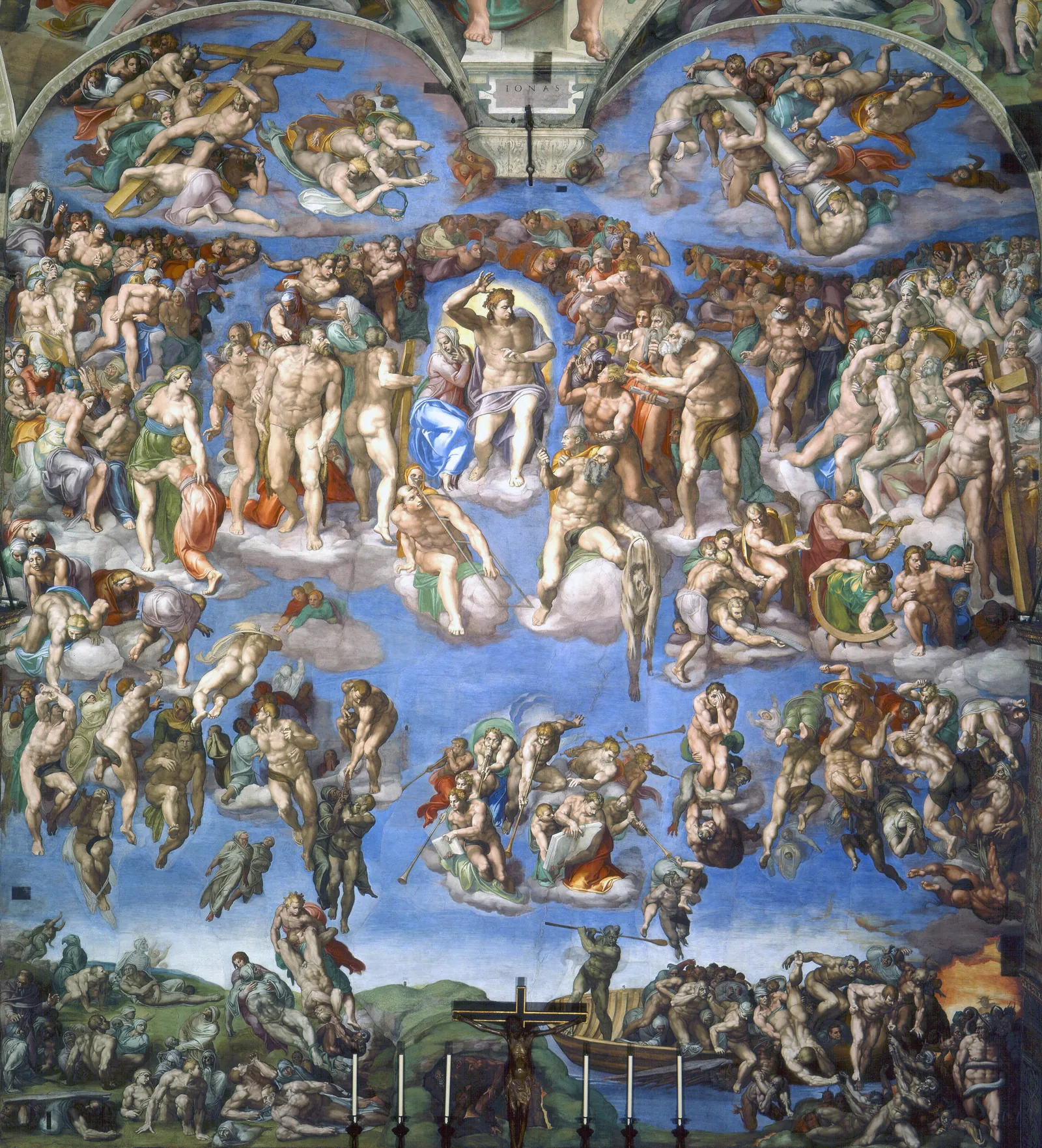
The whole altar wall, about 13.7 by 12 metres, painted 1536–1541. In the centre Christ raises his arm; the saved rise on the left, the damned fall on the right, and at the bottom Charon's boat carries them to Hell.
The nudes caused a scandal. After Michelangelo's death, Daniele da Volterra was paid to paint draperies over them — and was nicknamed il Braghettone, "the breeches-maker".
Could you guide the chapel?
Six questions. No photos allowed.